Weed of the Week: Sedges (Yellow Nutsedge, Purple Nutsedge, Globe Flatsedge)

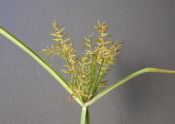
Yellow Nutsedge (Cyperus esculentus) is often referred to as nutgrass or watergrass. Yellow nutsedge is a perennial plant that reproduces primarily by small underground tubers (called nutlets) that form at the end of underground stems (rhizomes). A single plant can produce several hundred of these tubers throughout the summer. Yellow nutsedge can also spread by rhizomes. Yellow nutsedge can be identified by the triangular shape of its stem as can all sedges. You can feel the shape by rolling the stem in your fingertips. One method of control… Read More →

Texas A&M AgriLife Research Cool Season Clover Cultivars

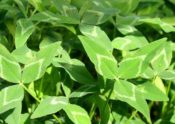
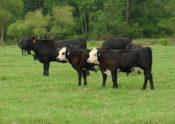
Blackhawk Arrowleaf Clover is a new cultivar that was released by Texas A&M AgriLife Research, Overton, TX in 2013. Blackhawk has multiple disease tolerance compared to Apache and Yuchi cultivars. Blackhawk is slightly earlier in maturity than Apache arrowleaf and is in full bloom around May 10 at Overton, TX. Test soil and follow lime and fertilizer recommendations Soil pH should be 6.0 to 6.5 Plan acreage needed (0.5 to 0.8 acre/cow + calf) Graze or hay warm season grasses to about 2-inch height before planting. Disturb sod… Read More →

Weed of the Week: Hemp Dogbane

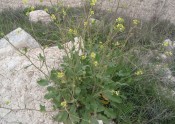
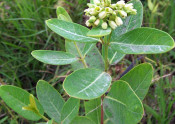
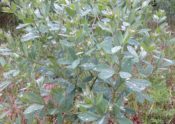
WEED OF THE WEEK: Hemp Dogbane (Apocynum cannabinum L.) Hemp dogbane is an erect, one to three feet tall perennial. It grows from woody horizontal rootstocks. Leaves are smooth, elliptical, narrow and erect. Flowers are small with five greenish-white petals. Leaves and stems have a milky sap. Seed pods are long and slender. Hemp dogbane plants produce from 800-12,000 seeds per plant. Each plant usually has 10 to 60 seed pods and each pod contains between 80-200 seeds.Hemp dogbane is very competitive. It can reduce forage yields if not… Read More →

Sugarcane Aphids: A Threat to Forage Sorghums, Sorghum-Sudangrass and Sudangrass

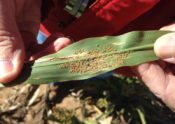
Sugarcane aphids feed on and damage all species of Sorghum grown for grain, forage and hay.  Aphids feed on plant sap and infested leaves turn yellow and then brown and die, reducing forage yield. Sugarcane aphids also produce large amounts of honeydew, a sticky waste product that accumulates on leaves.  A black sooty mold sometimes grows on the honeydew, turning leaves black.  The honeydew on leaves and stems can gum up harvest machinery.   The following practices can reduce the risk of sugarcane aphid damage: Plant hybrids with… Read More →

Basic Principles of Forage Quality

Basic Principles of Forage Quality AgriLife Extension conducts many programs across Texas on different kinds of forages.  We all know forage quality is important.  My observation is that many hay growers and hay feeders don’t test for it.  In fact, at sale I am sure most forage changes hands in Texas with no measurement of forage quality.  But forage quality indeed is a value factor.  Forage is not just about tons of hay per acre. A New Mexico State University colleague, research forage agronomist Leonard Lauriault, Tucumcari, shared… Read More →

Eastern Texas Forage Calendar

Need a last minute Christmas gift or an extra stocking stuffer… Landowners interested in managing forage production for grazing and/or hay can use this calendar for management suggestions specific to each month and to record the dates of the management tasks performed. Keeping a record of management activities by date can help you document your management strategies for your pastures each year. To order a copy visit: http://agrilifelearn.tamu.edu                                            

General Information About Glyphosate

by Scott Notle-Texas A&M AgriLife Extension; Peter Dotray-Texas A&M AgriLife Research & Extension; Muthu Bagavathiannan-Texas A&M AgriLife Research What is glyphosate? Glyphosate is an herbicide used to control a wide range of undesirable plants in lawns and gardens, row crops, pastures, aquatics, road sides, rights-of-way, and other managed area. First introduced for use in 1974, glyphosate is now one of the most widely used herbicides in the United States. Today, there are over 750 products that contain this active ingredient for agronomic, commercial, and home use. How does… Read More →

Fall Armyworms

The fall armyworm is a common pest of bermudagrass, sorghum, corn, wheat and ryegrass and many other crops in north and central Texas. Armyworms are very small (1/8 inch) at first, cause little plant damage and as a result infestations often go unnoticed. Larvae feed for 2-3 weeks and full grown larvae are about 1 to 1-1/2 inches long. Given their immense appetite, great numbers, and marching ability, fall armyworms can damage entire fields or pastures in a few days. Fall armyworm outbreaks in pastures and hay fields… Read More →

Texas Agriculture Law Blog

AgriLife Logo

Tiffany Dowell Lashmet is an Assistant Professor and Extension Specialist in Agricultural Law with Texas A&M AgriLife Extension. On her Texas Agriculture Law Blog she recently posted information on Federal Motor Carrier Safety Administration (FMCSA) Hauling Regulations. Visit her blog linked below for more information.   Revised Outline for Analyzing FMCSA Hauling Regulations   Vanessa Corriher-Olson Associate Professor, Forage Extension Specialist Soil & Crop Sciences Texas A&M AgriLife Extension, Overton,TX vacorriher@ag.tamu.edu 903-834-6191      

Pesticide Applicator Trainings

TWO EVENTS   December 1, 2016 (5 pesticide CEUs: 1 Laws & Regulations; 1 IPM and 3 general) Weed Control in Pastures and Hay Meadows (2 hours) Getting the Most out of Your Sprayer Equipment Beef Cattle External Parasite Control Records, Your Best PPE December 6, 2016 (5 Pesticide CEUs: 1 Laws & Regulations; 2 IPM and 2 general) Pesticides and Pollinators Mosquito Control Update Turfgrass Insect Pest Update Wild Pig Control in Urban Environments On Site Registration Cost: $35/person (includes lunch) Texas A&M AgriLife Research and Extension Center… Read More →